Short answer
At Istanbul Airport (IST), international passengers clear passport control, collect bags and pass customs before entering the arrivals hall, where private drivers wait with name signs. Allow 30–75 minutes from landing to the car, more at peak times. ATMs are on the arrivals floor, taxi ranks at exits 9 and 13, and Havaist buses on level −2. Koşkan Travel's chauffeurs wait 60 minutes free from the actual landing time.
On this page
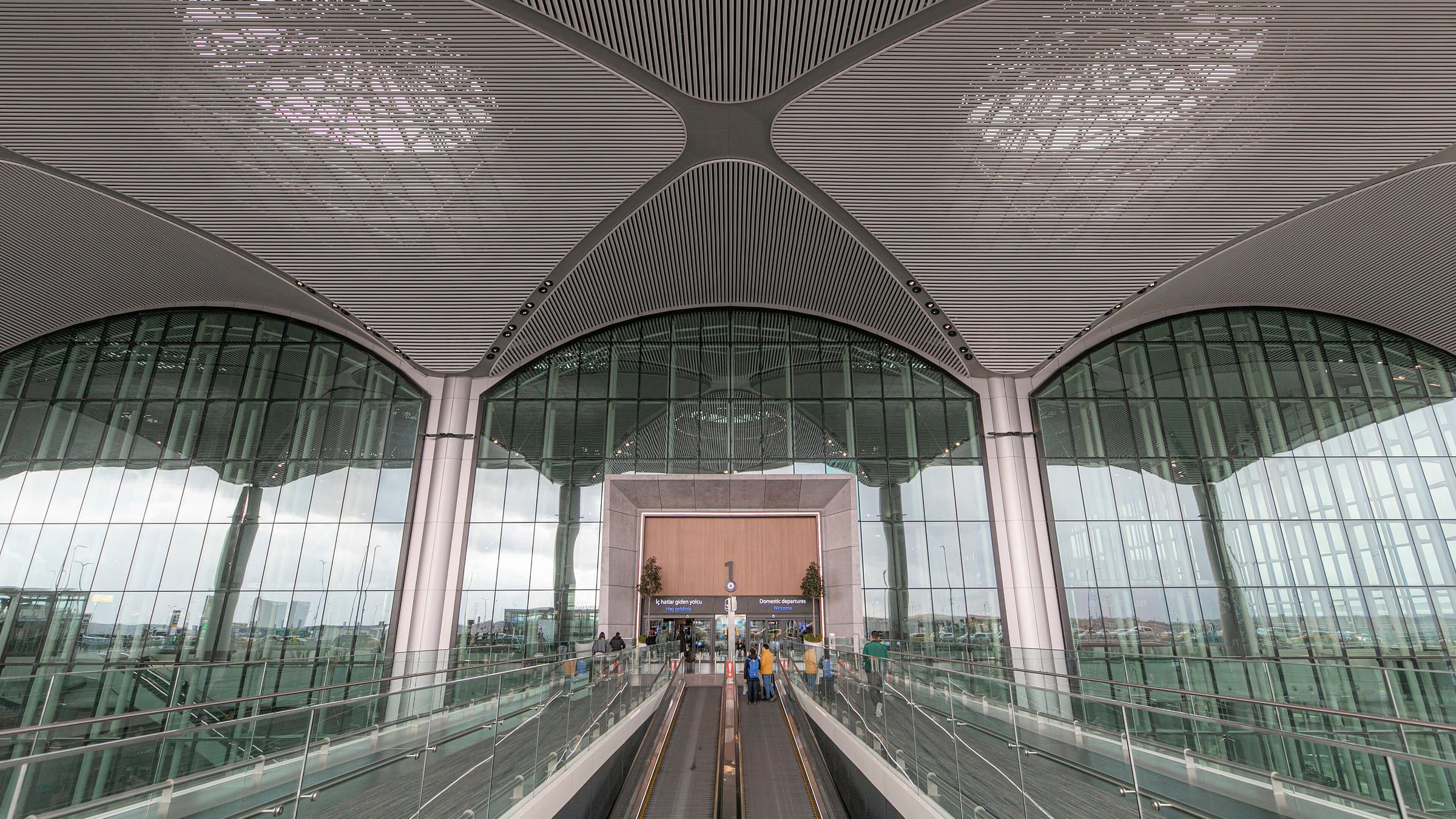
Istanbul Airport is one of the largest terminals in the world under a single roof, and it feels like it on the walk from the gate. The good news: the route from the aircraft to the street is a straight sequence with no surprises once you know it. Here it is, step by step, with the details that matter when you are tired and carrying a bag.
Before you land: three things to sort out
Entry rules. Check them before you fly, not in the queue. Türkiye’s Ministry of Foreign Affairs publishes the visa rules for every passport. Ordinary passport holders from many countries, including the UK, Germany and the United States, can visit for tourism for up to 90 days in any 180-day period without a visa. Other nationalities apply online for an e-Visa at evisa.gov.tr. Your passport must stay valid for at least 60 days beyond the end of your permitted stay; the ministry advises six months to be safe.
Mobile data. If your phone supports eSIM, buy a data plan for Türkiye before departure and switch it on as you taxi to the gate. It is the quickest way to be online at passport control, and online is where your booking page and your chauffeur’s details are.
Your pickup details. If you have booked a car, check that your flight number is on the booking. With Koşkan Travel it is a required field, because it is how we follow your landing: if the flight is early, late or diverted, we see it before you land. Keep your reservation number (format KT-XXXXXX) and the digital pass on your phone. The pass carries a QR code and the meeting point.
Step 1: From the aircraft to passport control
Follow the signs for arrivals and passport control. Ignore “Transfer” signs unless you are connecting to another flight: transfer passengers stay airside, and if Istanbul is your destination you need passport control.
Plan for a proper walk. Gates on the outer piers can be a long way from the immigration hall, with moving walkways for part of it. Some flights park at a remote stand and passengers come in by bus, which adds time. Neither is unusual, and neither is something to worry about if whoever is meeting you is tracking the flight.
Step 2: Passport control
There are separate lanes for Turkish citizens and for foreign passports. Have your passport open at the photo page and, if you needed one, your e-Visa printed or on screen.
For nationalities that are eligible for a visa on arrival, the airport operates two visa offices near piers A, B and F. That is a backup, not a plan: getting the e-Visa online before you travel saves a second queue.
Queue length depends on how many long-haul flights have landed in the same half hour. iGA, the airport operator, shows live waiting times for passport control on istairport.com, which is worth a glance as you taxi in.
Step 3: Baggage claim
The screens after passport control show the belt for your flight. Two useful details in the international baggage hall:
- ATMs before customs. The airport lists ATMs across from belts 12, 17 and 21A. Taking out a small amount of lira here, while you wait for your bag, saves a stop later.
- Missing or damaged luggage. Report it at your airline’s baggage desk in the hall before you go through customs. Once you are out in the public area, you cannot simply walk back in.
Step 4: Customs
If you have nothing to declare, walk through the green line. Allowances are listed on the airport’s customs page; for example, adults over 18 may bring in up to 1 litre of drinks above 22% alcohol and up to 2 litres of drinks at 22% or less. Customs is usually the quickest part of the whole arrival.
Step 5: The arrivals hall
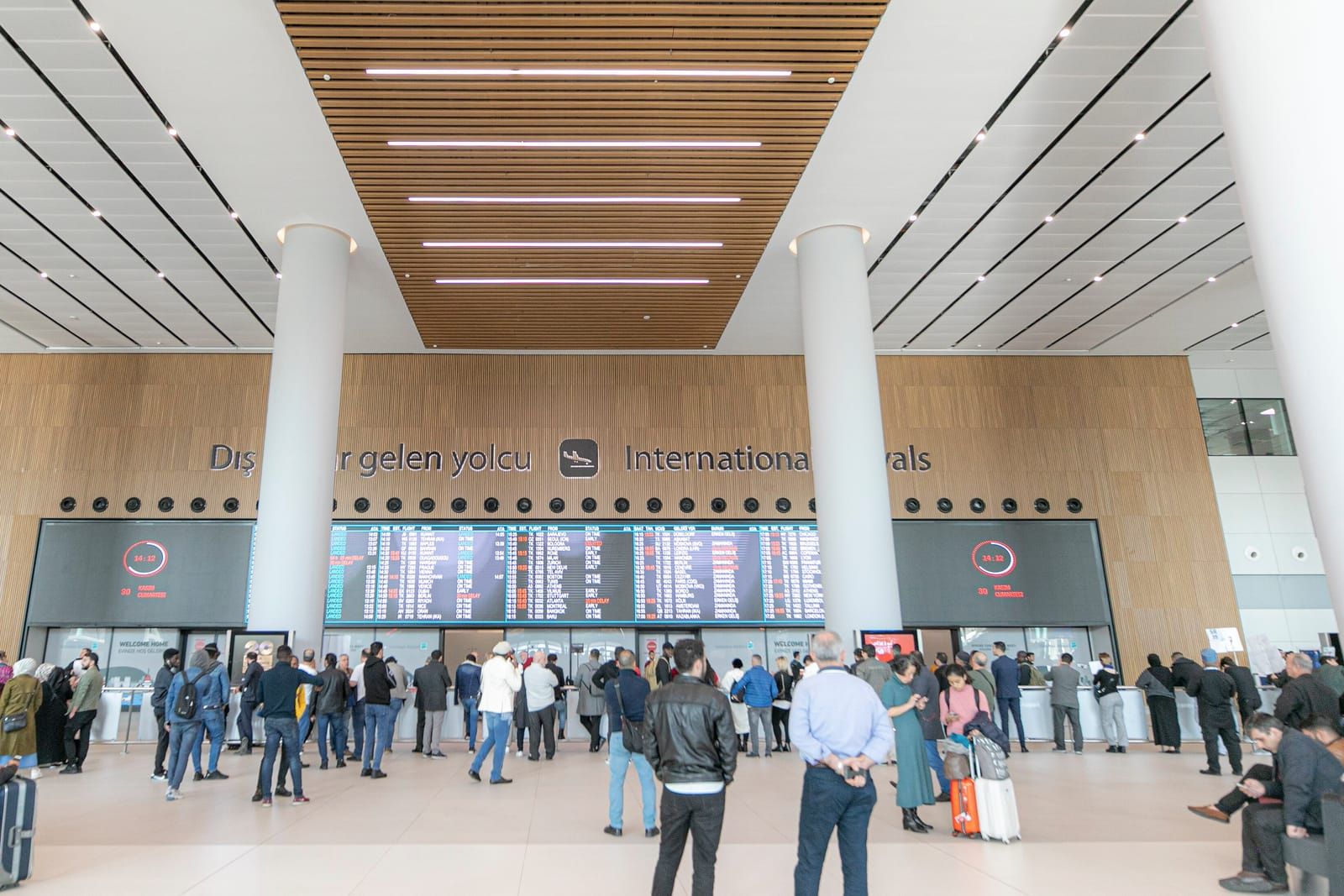
The doors after customs open into the public arrivals hall. This is where people are met. Private drivers stand along the barrier holding name signs; nobody meets you airside.
The arrivals floor runs along the front of the terminal with numbered exit gates. A few landmarks, all from the airport’s own listings:
| What | Where |
|---|---|
| Taxi ranks (orange, turquoise, black) | Arrivals floor, exits 9 and 13 |
| ATMs and bank branches | Next to exits 8, 10, 13 and 14; Ziraat and QNB branches next to exit 10 |
| Tourist information (İBB and Ministry of Tourism) | Near exits 12 and 13 |
| Left luggage office | Opposite exit 13, next to the domestic passenger exit |
| Havaist airport buses and İETT city buses | Transport floor, level −2 |
| M11 metro | Follow the M11 signs from the terminal |
International and domestic passengers come out at different points along this floor. If you have arranged to meet someone at a particular exit and you come out somewhere else, walk along the hall; it is all on one level.
Cash and ATMs
You need less cash than you might think. Cards are accepted almost everywhere in central Istanbul, Havaist buses take credit and debit cards, and the balance of a Koşkan Travel transfer can be paid to your chauffeur by card or in cash (Turkish lira, euro, pound or dollar).
If you withdraw lira at an ATM and the machine offers to charge you in your home currency, decline and choose lira. The conversion the machine offers is usually worse than your own bank’s. Exchange offices at the airport are convenient but rarely the best rate in town, so change only what you need for the first day.
SIM cards and eSIM
Turkcell, Vodafone and Türk Telekom all sell tourist SIM packages, and their shops and resellers are on the landside arrivals floor. You will need your passport to buy a Turkish SIM. Airport prices tend to be higher than at the operators’ own stores in the city, and the counters can have queues when several flights land together.
A phone brought from abroad can be used on a Turkish SIM for a limited period before it has to be registered with the authorities. That period comfortably covers a holiday, so a normal trip is not affected. A data-only eSIM from an international provider avoids the question altogether, because it works as roaming.
How long it really takes: landing to car
These are typical ranges for an international arrival. They are not promises, and the passport queue is the one that moves most.
| Step | Typical time |
|---|---|
| Taxiing to the gate and leaving the aircraft | 5–20 min (more with a remote stand and bus) |
| Walk to passport control | 5–20 min |
| Passport control | a few minutes to 30 min or more at peak times |
| Baggage claim | 10–30 min |
| Customs and the walk into the hall | about 5 min |
| Total | usually 30–75 min |
Cabin bags only and an early-morning or mid-afternoon landing put you at the short end. A late-evening arrival with checked bags, when several long-haul flights land together, puts you at the long end.
With Koşkan Travel, the first 60 minutes of waiting are free and count from the actual landing time, so a normal arrival never costs extra. If something unusual holds you up, such as a lost bag report, let us or your chauffeur know; waiting beyond the free hour is £15 per started 30 minutes.
Finding your chauffeur, and what to do if you can’t
With Koşkan Travel, your chauffeur waits in the arrivals hall with a sign showing your name. The sign is the first thing to look for; the meeting point is written on your digital pass. Your booking page shows the car, a black Mercedes-Benz Vito, and from three hours before pickup its position on a live map. When your chauffeur is in the hall, the booking status changes to show that the car has arrived.
Every chauffeur who meets our guests is licensed, vetted and trained to the same meeting procedure. We never pass a booking to a taxi rank or a ride-hailing app, so the person holding your name sign is one of our chauffeurs.
If you come through the doors and don’t see your name:
- Stay inside the arrivals hall. Don’t head out to the kerb or down to the bus level; the meeting point is inside.
- Open your booking page. Check the meeting point on your digital pass and whether the status shows that your chauffeur has arrived.
- Get in touch. Use the contact details in your confirmation. If you are not online yet, the airport has Wi-Fi.
- Walk the hall once. If you came out of a different exit from the one in the confirmation, walk along the arrivals floor towards it.
- Say no to strangers. If someone approaches you claiming to be “your driver” but has no sign with your name and doesn’t know your reservation number, walk past politely.
Arriving by private jet: the General Aviation Terminal
Private flights are usually handled away from the main terminal, so most of the steps above won’t apply. In May 2026 iGA, the airport operator, and Jetex opened the JETEX-iGA General Aviation Terminal at Istanbul Airport: a separate three-storey building of about 5,000 square metres with its own passport and security checks, used by private-jet passengers and by airline passengers who book it in advance.
If that is how you are arriving, enter the aircraft registration (the tail number) in the flight-number field when you book a transfer with us, and write “General Aviation Terminal” in the booking notes. We confirm the meeting point with you before the day.
After the meeting: the drive into the city
Your chauffeur takes the luggage and walks you to the car. From Istanbul Airport, Taksim is about 42 km and usually 45–75 minutes away; Sultanahmet is about 52 km and 50–85 minutes; Beşiktaş and Ortaköy are about 45 km. The shorter times are late at night, the longer ones in the weekday evening rush.
The fare to the central European side is a fixed £65 per car for up to 6 passengers and 6 large suitcases, with tolls, airport parking and the waiting above included. Every zone is listed on the prices page. If you are weighing up the metro, the Havaist bus or a taxi instead, our guide to getting from Istanbul Airport to the city compares all four with current fares, and the IST vs Sabiha Gökçen guide helps if you are not sure which airport you are landing at.
Sources
- 1. iGA Istanbul Airport — Immigration Office (entry rules, visa offices)
- 2. Republic of Türkiye Ministry of Foreign Affairs — Visa information for foreigners
- 3. Official e-Visa application system of the Republic of Türkiye
- 4. iGA Istanbul Airport — Banks and ATMs
- 5. iGA Istanbul Airport — Customs services and allowances
- 6. iGA Istanbul Airport — Taxis (categories, tariffs, pick-up points)
- 7. iGA Istanbul Airport — Public transportation (Havaist, İETT, M11 metro)
- 8. iGA Istanbul Airport — Left luggage offices and storage lockers
- 9. iGA Istanbul Airport — JETEX-iGA General Aviation Terminal opens (5 May 2026, in Turkish)
Koşkan Travel editorial team · ·